
Grace Alone: What the Reformation Recovered
By Kidus Zekarias
Among the great slogans of the Protestant Reformation, Sola Gratia—Grace Alone—stands at the very heart of the Gospel. It proclaims that sinners are saved entirely by God's unmerited favor in Christ, not because of anything they have done, deserve, or contribute. Salvation is God's work from beginning to end.
The Reformers did not claim to invent this doctrine. Rather, they argued that they were recovering the teaching of Holy Scripture and the testimony of the early Church after centuries in which the Gospel had been obscured by confidence in human merit and works.
This article explores the biblical foundation of Grace Alone and demonstrates that many of the Church Fathers taught truths that harmonize with the Reformation's central confession.
Grace Is God's Free Gift
The Apostle Paul leaves no room for human boasting:
"For by grace you have been saved through faith. And this is not your own doing; it is the gift of God, not a result of works, so that no one may boast."
— Ephesians 2:8–9
Grace is not merely God's assistance to people who save themselves. It is God's undeserved favor toward those who are spiritually dead.
Paul writes:
"But God, being rich in mercy... made us alive together with Christ—by grace you have been saved."
— Ephesians 2:4–5
Likewise,
"They are justified by his grace as a gift, through the redemption that is in Christ Jesus."
— Romans 3:24
Salvation is repeatedly described as a gift, never as a wage earned through obedience.
Grace and Works Cannot Be Mixed
Paul presents grace and works as mutually exclusive principles regarding justification.
"But if it is by grace, it is no longer on the basis of works; otherwise grace would no longer be grace."
— Romans 11:6
Similarly,
"He saved us, not because of works done by us in righteousness, but according to his own mercy."
— Titus 3:5
The Reformers emphasized this distinction because any attempt to make human merit part of justification diminishes the freeness of God's grace.
Humanity Cannot Save Itself
Scripture portrays fallen humanity as spiritually helpless.
"There is none righteous, no, not one."
— Romans 3:10
"All have sinned and fall short of the glory of God."
— Romans 3:23
Jesus Himself declares:
"Apart from me you can do nothing."
— John 15:5
Therefore, salvation must originate entirely from God's mercy.
The Church Fathers on Grace
The Fathers consistently affirmed that salvation begins with God's grace and not human merit. While they often spoke in different theological contexts than the sixteenth-century Reformers, many of their statements strongly echo the biblical doctrine of grace.
St. Clement of Rome (1st Century)
Writing near the end of the first century, Clement reminds believers that they are not justified by themselves:
"And we, too, being called through His will in Christ Jesus, are not justified through ourselves, nor through our own wisdom or understanding or godliness or works which we have wrought in holiness of heart, but through faith, whereby Almighty God has justified all men from the beginning."
— Clement of Rome, First Epistle to the Corinthians 32
This is one of the earliest post-apostolic affirmations that justification is not grounded in human works.
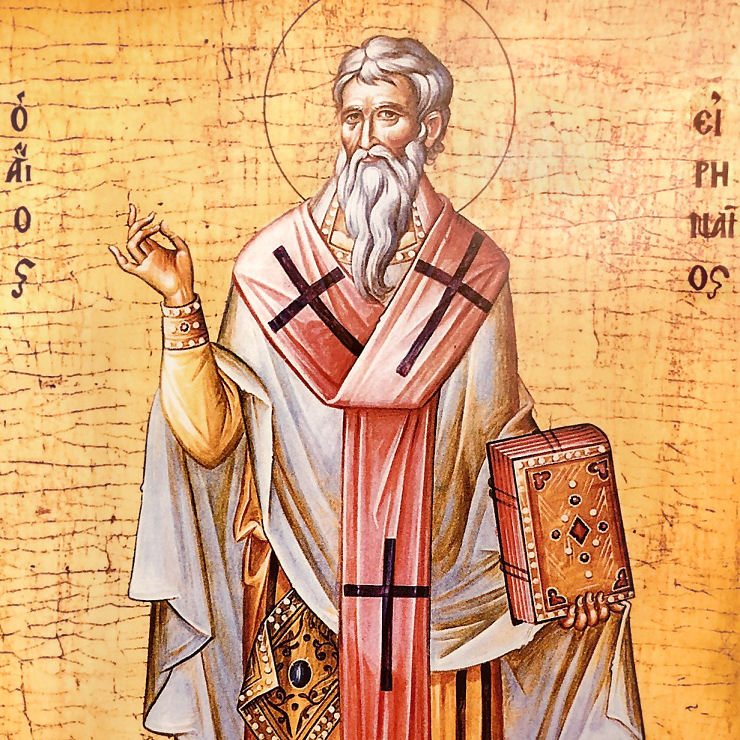
St. Irenaeus of Lyons (2nd Century)
Irenaeus repeatedly emphasizes that salvation is God's gracious gift.
"The Lord has redeemed us through His own blood, giving His soul for our souls and His flesh for our flesh."
— Against Heresies 5.1.1
For Irenaeus, redemption is entirely Christ's accomplishment, freely bestowed upon His people.
St. Athanasius (4th Century)
Athanasius teaches that humanity could not restore itself.
"He became man that we might become divine."
— On the Incarnation 54
The Incarnation itself is an act of divine grace. Humanity contributes nothing to its own rescue; God descends to save those unable to save themselves.
Elsewhere he writes:
"For by grace you have been saved."
Athanasius repeatedly cites Paul's teaching to emphasize that salvation originates in God's mercy rather than human effort.
St. Ambrose of Milan (4th Century)
Ambrose strongly stresses that forgiveness is God's work.
Commenting on grace, he writes:
"No one is justified by works, but by faith, because the weakness of the flesh is an obstacle to works, but the brightness of faith obtains the forgiveness of sins."
— On Jacob and the Happy Life, Book I,
This passage would later be quoted with approval by Martin Luther.
St. John Chrysostom (4th Century)
Preaching on Ephesians 2, Chrysostom declares:
"What then? Is faith enough to save us? No; but God requires it, because He does not save us against our will. Yet even faith itself is His gift."
— Homilies on Ephesians, Homily 4
Chrysostom consistently emphasizes that salvation rests upon God's mercy rather than human boasting.
St. Augustine of Hippo (5th Century)
No Father influenced the Reformers more than Augustine.
He writes:
"God does not choose us because we believe, but that we may believe."
— On the Predestination of the Saints 17
Again:
"When God crowns our merits, He crowns nothing other than His own gifts."
— Letter 194.5.19
And elsewhere:
"Grace is not given because we have done good works, but in order that we may be able to do them."
— On Grace and Free Choice 17
For Augustine, every aspect of salvation—from faith to perseverance—is rooted in divine grace.
Martin Luther and the Recovery of Grace
Martin Luther's great struggle centered on one question:
How can a sinner stand righteous before a holy God?
His answer came through Scripture, especially Romans and Galatians.
Paul writes:
"The righteous shall live by faith."
— Romans 1:17
And again:
"We hold that one is justified by faith apart from works of the law."
— Romans 3:28
Luther realized that justification is not something God rewards after human effort but a gift freely given because of Christ alone.
This rediscovery became one of the defining truths of the Reformation.
Grace Produces Good Works
The doctrine of Grace Alone has often been misunderstood as encouraging moral laziness.
Scripture teaches the opposite.
Immediately after declaring salvation by grace, Paul writes:
"For we are his workmanship, created in Christ Jesus for good works, which God prepared beforehand."
— Ephesians 2:10
Good works do not earn salvation.
They are its inevitable fruit.
As Jesus teaches:
"Every healthy tree bears good fruit."
— Matthew 7:17
The Lutheran Confessions summarize this beautifully:
"Faith is a living, busy, active, mighty thing, so that it is impossible for it not to be doing good works continually."
— Formula of Concord, Solid Declaration IV
Grace Gives All Glory to Christ
If salvation depended partly upon human achievement, then some portion of the glory would belong to humanity.
Instead, Scripture directs all praise to Christ.
"Let the one who boasts, boast in the Lord."
— 1 Corinthians 1:31
Christ accomplished everything necessary for our redemption.
He fulfilled the Law.
He bore God's wrath.
He died for sinners.
He rose again for our justification.
Therefore,
"Since we have been justified by faith, we have peace with God through our Lord Jesus Christ."
— Romans 5:1
Our confidence rests not in our performance but in Christ's finished work.
Conclusion
The doctrine of Grace Alone was not born in the sixteenth century. It is rooted in the teaching of Christ, proclaimed by the Apostles, and witnessed throughout the early centuries of the Church.
The Reformers insisted that salvation is:
initiated by God's grace,
accomplished by Christ alone,
received through faith,
apart from human merit,
and resulting in a life of grateful obedience.
As Augustine wisely observed:
"When God crowns our merits, He crowns nothing other than His own gifts."
That statement captures the heart of Sola Gratia. Every blessing of salvation—from election to glorification—is the gracious gift of God, so that "no human being might boast in the presence of God" (1 Corinthians 1:29).
To God alone belongs the glory.
Comments
Log in to join the conversation.
Log InNo comments yet — be the first to share your thoughts.